Hard problems, honest metrics
I can frame a messy objective, choose evaluation that does not flinch from low absolute rates, and still show where learning is real.
Can a drone find a hidden target with no map and no GPS — only a camera, motion sensors, and what it learns from practice?
In short
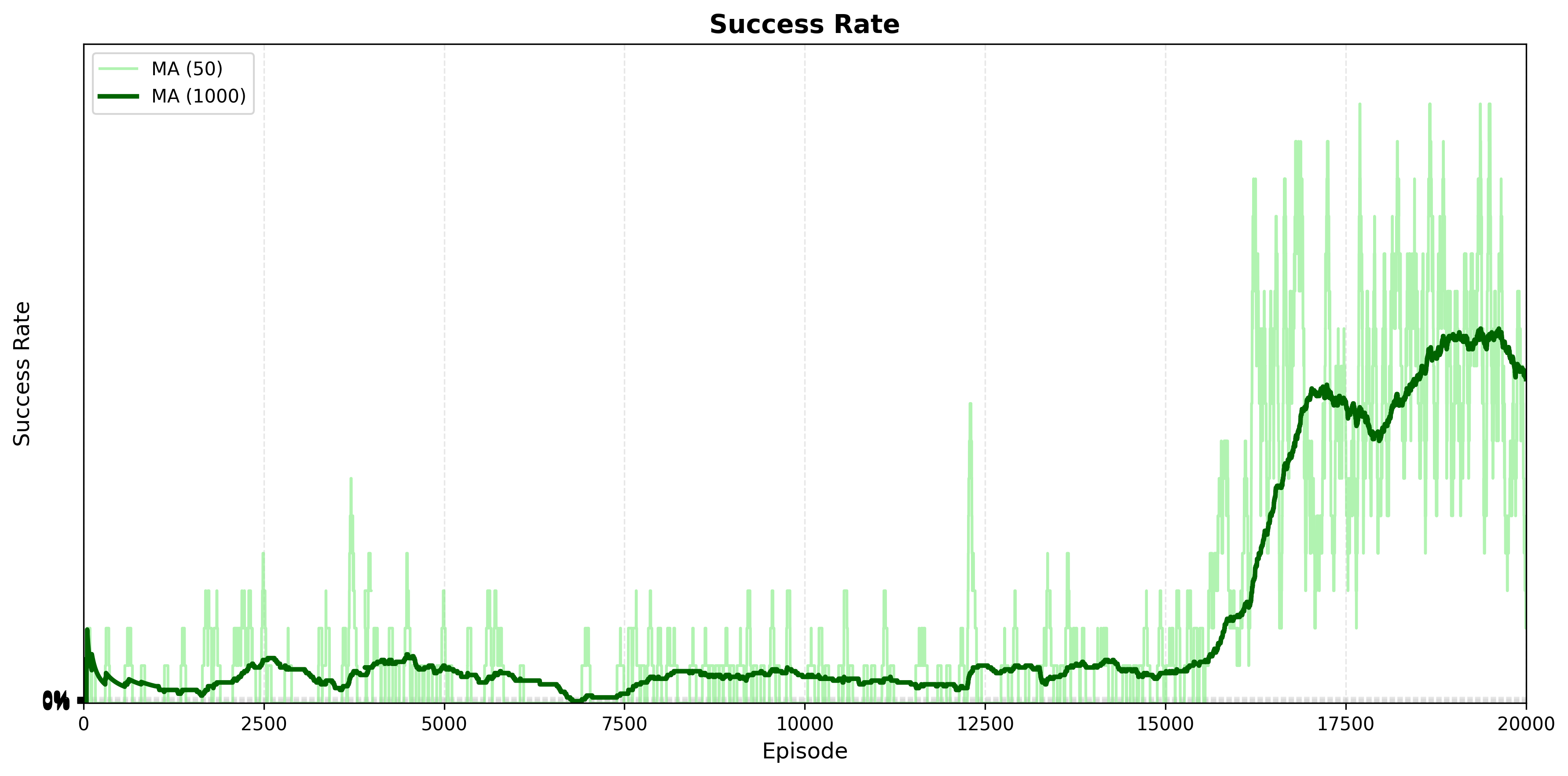
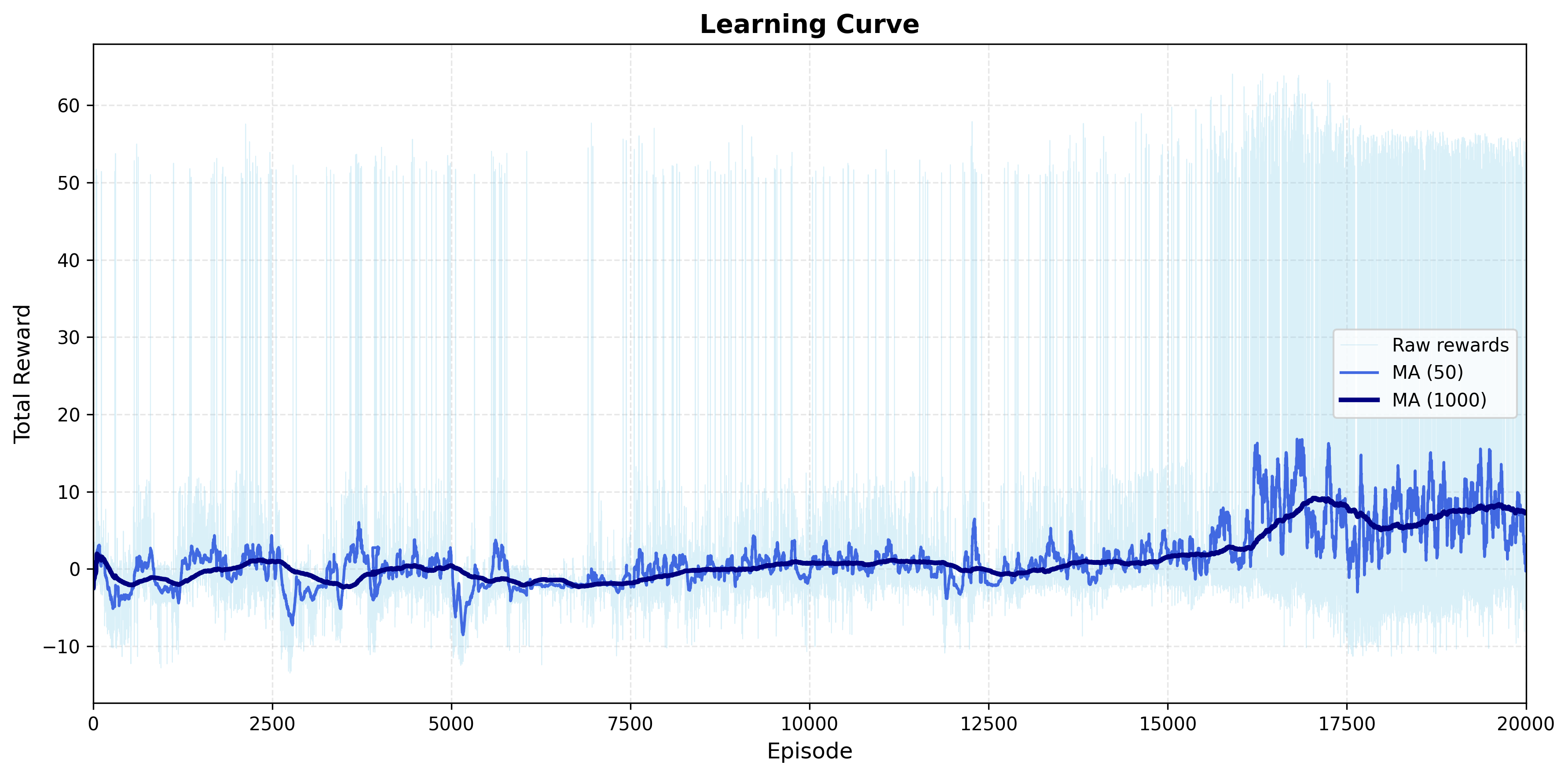
A drone must find a randomly placed target in a simulated world — with no map, no GPS, and no target coordinates. It only gets camera frames and motion sensors, and it improves by flying again and again. After about 20,000 practice flights, overall success stayed modest (the task is hard), but late in training it found the target far more often and crashed less. Use this page as a walkthrough: start in plain language, open deeper detail only if you want, then see the numbers and what the work transfers to.
Why this is hard
The agent never gets GPS, a floor plan, or the target’s coordinates. It must search from camera frames and IMU alone, in a simulated world where the target moves every episode. Low overall success is expected for this class of problem — the credible signal is that learning still emerges late, collisions fall, and the policy becomes more decisive.
Plain story first → system design in everyday language → formal math only when you choose to go deeper.
Click a block to open it.
Example success in the thesis setup — SAC policy in AirSim Blocks, chase-cam of search, acquisition, and close-in. Recorded after submission.
Overall success looks modest because the task is brutally hard. The stronger claim is late capability: after a long grind, the policy finds more often, crashes less, and acts more decisively.
Read 17.3% late success against 4.64% overall — that gap is the learning story, not a failure mode.
For employers and clients: this is evidence of systems thinking under uncertainty — not only academic RL vocabulary.
I can frame a messy objective, choose evaluation that does not flinch from low absolute rates, and still show where learning is real.
Simulation, sensors, policy, reward design, and feedback loops — the same habits needed to ship AI tools that behave under constraints.
Via Acolight I take scoped ideas into working products. This thesis is the research depth behind that delivery judgment.
Paper PDF and code links land here. Flight clip goes in the slot above when recorded.